Practical chemical safety and spill response
1 day · In-house workshop · English / Bahasa Malaysia
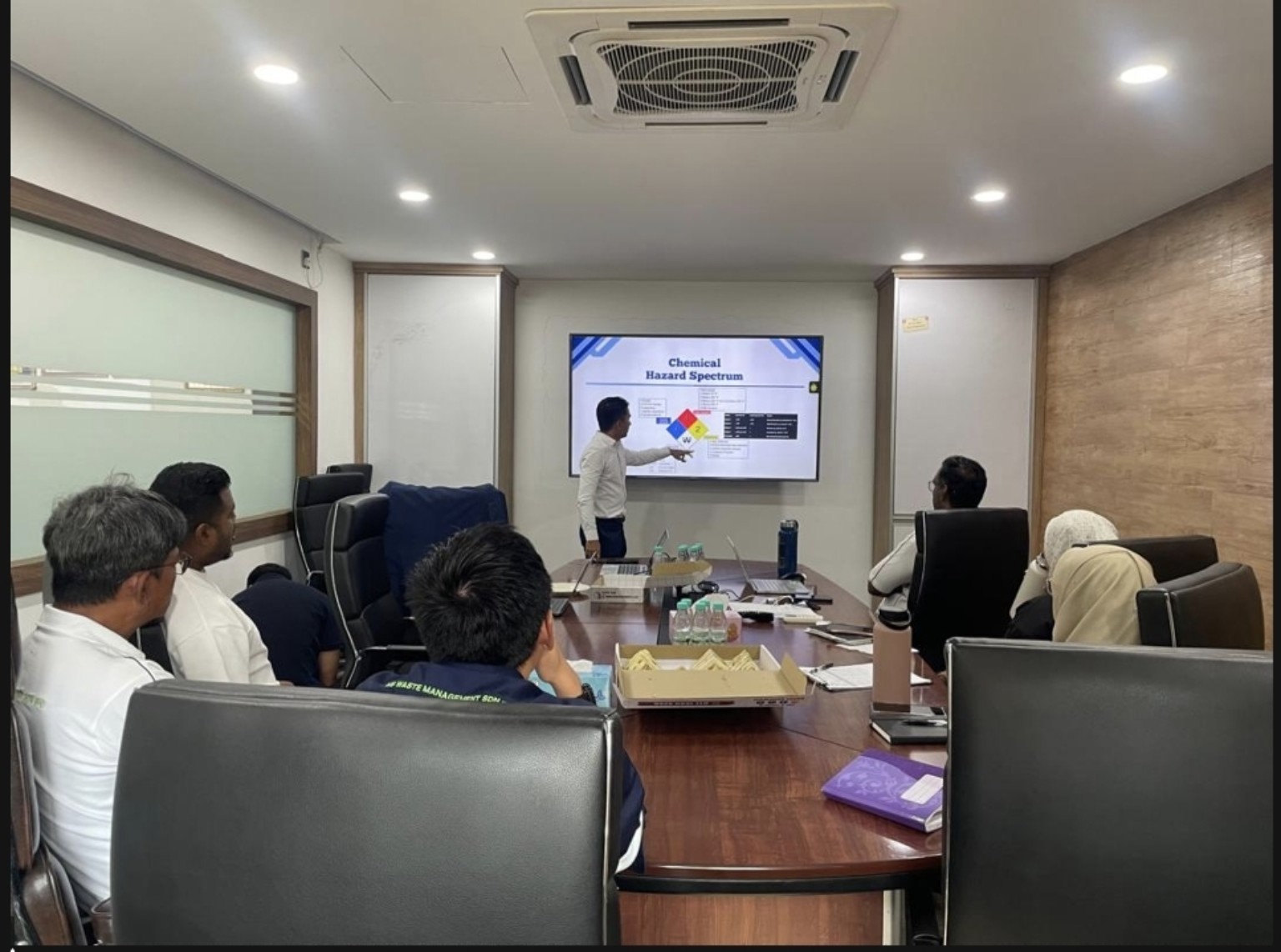
Connect everyday chemical handling with safer decisions during a spill. This one-day workshop with Aswad Aziz uses workplace examples to develop understanding of hazards, Safety Data Sheets, handling controls and response limits.
Who should attend?
Chemical handlers, production and maintenance personnel, supervisors and workplace response teams.
The workplace problem
Workers may recognise a hazard symbol without knowing how the product can harm them, which protection suits the task or when a release exceeds their response capability. The workshop connects these decisions with your workplace’s chemicals and activities.
Learning outcomes to agree in the course outline
- Locate relevant hazard and emergency information in an SDS.
- Recognise exposure routes and handling or storage concerns.
- Explain suitable controls and PPE considerations for an agreed task.
- Describe alarm, isolation and escalation decisions.
- Practise an agreed spill-response exercise safely.
Start with the chemicals and tasks at your workplace
Identify the substances handled, their quantities, storage locations, transfer methods, waste streams and people who may be exposed. Use routine mixing, decanting, cleaning and maintenance as training examples. Include nearby contractors and check whether ventilation works under realistic operating conditions.
A solvent used for cleaning may involve inhalation and fire hazards. A concentrated corrosive may cause splash injury during pouring. These examples help participants connect the product information with the task instead of treating every chemical in the same way.
Five checks before handling a chemical
- Identity: Check the product label against the intended substance. Do not identify a chemical by its appearance.
- Information: Locate relevant SDS information about hazards, exposure controls, incompatibilities and emergency actions.
- Exposure control: Check the agreed ventilation, transfer method, secondary containment and handling arrangements.
- PPE: Check that the selected protection suits the chemical and task. A generic glove may not resist the substance being handled.
- Response: Locate the alarm, eyewash or emergency shower arrangements and identify who is authorised to manage a release.
Spill decisions and response limits
Alert others and isolate the immediate area when this can be done safely. Identify the substance without entering the danger zone. Use the current SDS and site spill procedure to decide whether trained responders can manage the release within the site’s capability.
Unknown materials, toxic vapours, significant fire hazards or quantities beyond the site’s capability require escalation and specialist response. Do not attempt to neutralise or mix chemicals without an approved procedure. Only trained and suitably equipped people should conduct containment or clean-up.
Used absorbents and contaminated materials need appropriate waste classification and management. The exercise should include the handover and follow-up decisions, rather than ending when the visible spill has been collected.
Check performance, not attendance alone
Participants can be asked to locate hazard information in an SDS, select a safe handling method, recognise incompatible storage and explain an emergency escalation decision. A practical demonstration may be included where it is safe and appropriate. Attendance alone does not establish site-specific competency.
A management checklist for follow-through
- Is the chemical inventory current?
- Are current SDS accessible at the point of use?
- Do exposure assessments and controls reflect the actual tasks?
- Have emergency equipment and spill procedures been checked?
- Are training and refresher needs reviewed when exposure or work arrangements change?
Malaysian regulatory references
Reference documents for agreeing the workshop scope include the Occupational Safety and Health (Classification, Labelling and Safety Data Sheet of Hazardous Chemicals) Regulations 2013 and the Occupational Safety and Health (Use and Standards of Exposure of Chemicals Hazardous to Health) Regulations 2000.
The supplier’s hazard information and the employer’s workplace exposure controls address different questions. A labelled container or an accessible SDS alone does not establish that exposure during a particular task is controlled. Review the current regulatory texts, product SDS and site procedures when agreeing the programme.
DOSH: regulations under the Occupational Safety and Health Act 1994 (Act 514), as amended.
Practical delivery and assessment
Review SDS information and workplace scenarios, then complete an agreed demonstration or group exercise. Simulated materials, spill kits, PPE, venue and exercise boundaries must be confirmed before delivery. Participants must not approach an unknown or uncontrolled release.
Knowledge checks, group presentations and practical assessment are selected for the agreed scope. Confirm participant number, language and experience so delivery and assessment remain realistic.
Materials, reporting and location
Aswad is based in Kajang, Selangor and accepts training enquiries across Malaysia, subject to availability and travel arrangements. The agreed pack can include slides, a workbook, pre/post checks, practical activities and an End of Training Report. Confirm any site assessment and management-report requirements before appointment.
For companies and training providers
Corporate teams can request a workplace-focused proposal. Providers can agree trainer-only delivery or a complete pack, including branding, ownership, preparation and reporting responsibilities.
View Aswad’s trainer profile · Associate-trainer engagement
Frequently asked questions
Can we use our own chemicals and SDS?
Relevant SDS and anonymised task information help tailor examples. Any real-substance activity needs prior agreement and appropriate site controls; safe simulations may be used.
Does this replace a CHRA or specialist certification?
No. This is a training workshop. Any formal assessment or specialist certification requirement must be addressed separately through the appropriate arrangement.
Request the course outline
Share your company or provider name, workplace objective, date, location, participant profile and number, language and practical needs. Availability, final content and fee are confirmed after reviewing the brief.
Request a tailored training proposal · WhatsApp Aswad
HRD Corp claimable programmes may be available, subject to employer eligibility, available levy, grant approval, programme/provider registration status and the latest HRD Corp requirements.
Read the chemical risk assessment, SDS and CHRA guide · Browse all HSE training programmes