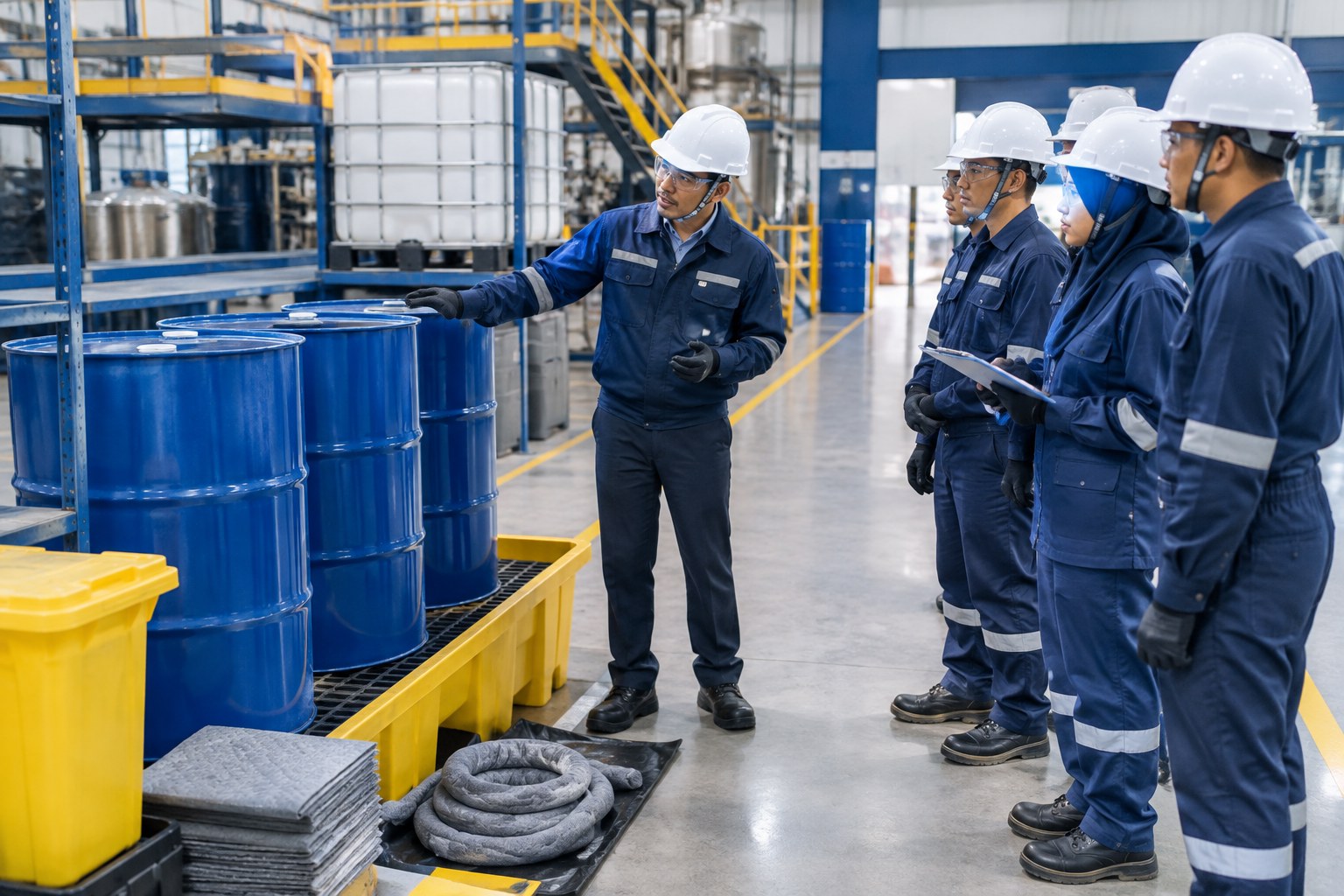
Chemical handling training in Malaysia should do more than teach workers to recognise hazard pictograms. An effective programme helps employees understand the chemicals they actually use, recognise exposure routes, prevent releases and respond safely when something goes wrong.
Which Malaysian chemical safety rules matter?
The CLASS Regulations 2013 establish supplier duties concerning classification, labelling and Safety Data Sheets (SDS). The USECHH Regulations 2000 address employers’ controls for exposure to chemicals hazardous to health, including risk assessment and appropriate information, instruction and training. The two sets of requirements serve different purposes; a labelled container is not itself proof that worker exposure is controlled.
Start with a chemical inventory and actual tasks
Identify the substances handled, their quantities, storage locations, transfer methods, waste streams and groups potentially exposed. Observe routine mixing, decanting, cleaning and maintenance. Check whether contractors work nearby and whether ventilation operates under realistic conditions.
A solvent used in a small cleaning activity may pose inhalation and fire risks. A concentrated corrosive could create splash injury during pouring. Training examples should reflect these differences rather than treating all chemicals as one category.
Five checks before a worker handles a chemical
- Identity: Confirm the product label against the intended substance; never rely on the appearance of the liquid.
- Information: Read the relevant SDS, especially hazard identification, controls, incompatibilities and emergency information.
- Exposure control: Check ventilation, closed transfer, secondary containment and safe handling arrangements.
- PPE: Confirm selected protection is suitable for the chemical and task; a generic glove may not be resistant to that substance.
- Response: Know the alarm, eyewash or emergency shower arrangements and who is authorised to manage a release.
Responding to a chemical spill
For a spill, alert others and isolate the immediate area. Identify the substance without entering the danger zone. Use the SDS and site spill procedure to determine whether trained responders can deal with the release. Unknown materials, toxic vapours, significant fire hazards or quantities beyond the site’s capability require escalation and specialist response. Do not attempt to neutralise or mix chemicals without an approved procedure.
Only trained and suitably equipped people should conduct containment or clean-up. Used absorbents and contaminated materials need appropriate waste classification and management.
Training effectiveness: test performance, not attendance
Ask participants to locate hazard information on a real SDS, choose a safe handling method, identify incompatible storage and explain an emergency escalation decision. Include a practical demonstration where it is safe and appropriate. An attendance certificate by itself does not establish site-specific competence.
Management checklist
- Is the chemical inventory current?
- Are current SDS accessible at the point of use?
- Are exposure assessments and controls suitable for actual use?
- Have emergency equipment and spill procedures been checked?
- Are training and refresher needs based on exposure and changes?
Discuss a practical chemical safety workshop
See Safe Chemical Handling and Spillage Control, or request a customised training proposal for your manufacturing, warehouse or maintenance team.
Official references
DOSH Chemical Management: CLASS 2013 and USECHH 2000 resources. Apply current regulations and site-specific SDS instructions.
Leave a Reply